
On the Commons

Commons Magazine

On the Commons
  • Follow On the Commons on Twitter
  • Fan On the Commons on Facebook
  • Donate to On the Commons

Stay connected: sign up

An Economy that Works for Everyone

The rise of solidarity economy initiatives charts a new third way between capitalism and communism

December 7, 2010 | by Kevin Karner

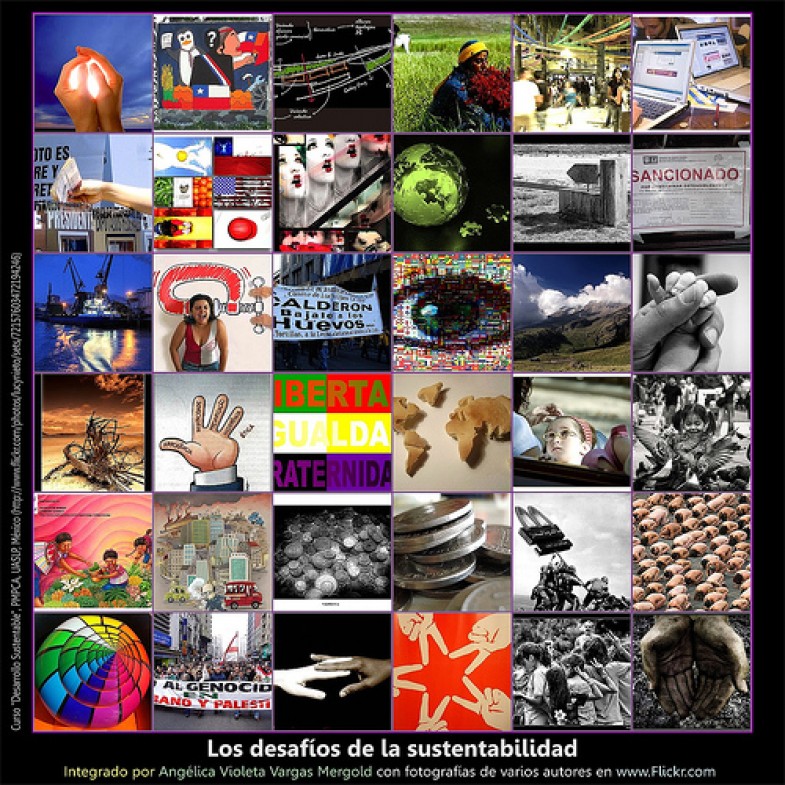
_Photo image by Lucy Nieto under a Creative Commons license from flickr.com_

The New York Times ran an article summarizing a recent report from the Bureau of Economic Analysis at the US Department of Commerce; apparently “American private businesses earned profits at an annual rate of $1.659 trillion in the third quarter,” the highest dollar amount on record. Earlier this year, the US Census Bureau reported that 2009 saw the income disparity between American citizens at the highest ever on record

Something has gone wrong; the invisible hand of global capitalism, the one that was supposed to lift all boats, has instead lined the pockets of transnational corporations at the expense of the financial security of everyone else, both in industrialized and non-industrialed societies.
Even after the worldwide repercussions of the housing bubble and economic crisis, neoliberal economics remain the guiding principle of policymaking behind the closed doors of institutions such as the International Monetary Fund, World Trade Organization and the governments of wealthy nations. This means the concentration of wealth in a few hands and the outsized influence of transnational corporations will continue.

But such is life in our democracy, a choice between two sides of the same coin, where global commerce is organized by the dichotomous systems Market driver of productivity and State control mechanism: capitalism or communism, run by the invisible hand or state bureaucrats. The choice is simple—the Soviet Union collapsed, did it not?

In his book of essays, The Art of The Commonplace, Wendell Berry calls both capitalist and state run structures modern incarnations of the same oligarchic, top down rule that characterized feudalism. He goes on to assert that “the limitless destructiveness of [our] economy comes about precisely because a corporation is not a person” but rather “a pile of money to which a number of persons have sold their moral allegiance…unlike a person, a corporation does not age…it does not come to see the future as the lifetimes of the children and grandchildren of anybody in particular. It can experience no personal hope or remorse.”
Slowly, people are beginning to realize that there is a third sector of the economy that the systemic ignoring of its value has let our political notions of progress become too far detached from reality and that, in Berry’s words, “powers not exercised by the government must return to the people.”

Social economies, or this third sector that seeks to reinsert human priorities and values back into economic practice, can be found all over the world, whether they explicitly use the term or not. Social economies fall on a spectrum ranging from completely voluntary systems, such as a gift or barter exchanges to social enterprises like worker cooperatives or the fair trade movement. As defined by the Canadian Social Economy Research Partnership, social economies are initiatives characterized by service to members of a community, autonomous management, democratic decision making, principles of empowerment, and mutually collective benefit.

In isolation, these local efforts and the values they stand for could be dismissed as novelty; taken altogether however, they can provide a viable alternative to the status quo. Hence, the term “solidarity economy,” a relatively new phrase for initiatives representing all three economic sectors that seek an alternative singular to the destructive tendencies of mainstream capitalism.

Because of the diverse and grassroots nature of these initiatives, there is no hard definition for what makes up the parameters of the solidarity economy. Definitions vary according mostly to region; there are now formally established solidarity economy networks in Peru, Bolivia, Argentina, Venezuela, Canada, the European Union, U.K., U.S., and most recently in the broader region of South East Asia. While various components of these economies may have existed for years, the establishment of these networks owes much to increasingly widespread access to networking platforms like internet directories and online mapping technologies.
John Samuel, the keynote speaker at this Asian Meeting of Solidarity Economy and Socially Responsible Business in Manila, defined the principles of the solidarity economy as concerned with the four pillars of an economic life cycle: ethical production, ethical market, consumption and investment.

Production might include worker controlled cooperatives and initiatives that recognize the commons. Examples might include a local food movement or community currency initiatives, both of which equitably maximize the benefit to the stakeholders involved; self-organizing systems like cooperative food storage or mutual insurance; ethical investment organizations such credit unions, or more broadly, charities.

Shifting institutional power from the bottom up is a gradual and arduous process. Reforming the destructive tendencies of unfettered capitalism will need the sustained efforts of generations to come, for which coalitions like the solidarity economy will be crucial.

Kevin Karner, a student at the University of Minnesota, is an intern at On The Commons.

the highest dollar amount on

the highest dollar amount on record. Earlier this year, the US Census Bureau reported that 2009 saw the income disparity between American citizens at the highest ever on record
gold investments

Shareholders have unearned

Shareholders have unearned income, the richest of these people don’t work, have never worked and don’t want to work but they want to cream 30% from each and every public company. I hope you are including these bone idle people in all of this and remember they cost you and me 50 times more than the bone idle on the dole or disability. The idle rich are the biggest obstacle to creating a fair society where everyone works and do not need pay day loans UK applying.
Why not an economy that works for all?
Would Paris Hilton do a real job of work cleaning toilets to earn the minimum wage as common-sense suggests is all she is capable of doing? Not a hope in hell. The road block to your dream of a decent world for all isn’t really some lazy dosser in Manchester on the DSS it is the lazy dossers on SDD (share-dividend-dole) in Beverly-hills, Monaco, New York, London, Berlin, Moscow, etc etc etc

I really love the idea behind

I really love the idea behind this is so much. There is so much that we can learn from this for the future. We need to definitely work on this more. Toronto Acne Clinic

Land Value an Essential Part

Land Value an Essential Part of the Commons
I want you to broaden your definition of the commons to include the value of land, the economic value of land, measured by the rent that has to be paid to use it or the purchase price that has to be paid to buy it. The value of land is the commons because this value is created 100% by the community of all people. If there was anything that is the commons,it is this value mostly now pocketed by individual “owners” of the earth who do not per se as owners of particular pieces of OUR land and natural resources create that value. The community of all humans create all land value 24/7/365 and since WE create it it rightfully belongs to US. The good news is that we have the right to take this value as a source of tax revenue to be used for public purposes and we have been exercising this right to a significant degree for centuries. All we have to do to take more of it by increasing the tax rate on land value in all its various forms. At the same time we should reduce the burden of taxation on what really belongs to individuals, the wages of their labor and the truly earned income from their real capital investment. In this way there is something in it for everyone and the community.

If we took most or all of the rental value of land in a yearly tax, (there are various ways to do this already in place) private ownership for purposes of right USE of land would remain but the community would assert ownership of the commonly created value of land the private collection of which has given all the incentive there ever was to for privatization of the commons for centuries. What else was the agony of enclosures over centuries but the private assertion of the right to collect the rental value of land that no private owner ever created. This was and is the fundamental flaw in what passes for capitalism and it now unquestioned even among environmentalists and sad to say most of those who speak of the commons.

Private “ownership” of land for exclusive USE makes sense and is necessary in an advanced economy where people build permanent and immovable structures on land and otherwise invest in real capital (tools of production) to enable them to make USE of the land in all the ways we human do. But private ownership of the community created value of land is not necessary and does not make sense in every way there is to look at it except to privatizers of land seeking unearned profit and land speculators. I shed no tears for the prospect of the imminent demise of those who are in fact parasites on the body of humanity.

I suggest this is the basis for an economy that works for everyone because it would exert community control of all land and natural resources while allowing individuals the exclusive access to and USE of land and resources and the right to reap what they sow that is a necessary aspect of respect for “real” property rights. The benefits from this shift of taxation to community created land values produces positive results too numerous to mention far beyond the mere utility of such a tax to generate all the revenue our governments could possibly need. It is a tax scheme that institutes economic justice and spreads healing balm across the entire economy as would be expected from a fundamental paradigm shift. What is more fundamental and paradigm shifting than questioning the right of property owners especially the great earthlords to keep what they charge the rest of us for access to our own home planet? We have the right to tax this value and all we have to do is tax more of it. We don’t need to create some new as yet unthought of method of exerting our rightful ownership of what is ours. For starters go talk to your local county tax assessor about this. She will tell you how it does and could work.

I know many people are now expecting and calling for a complete change of everything economic so the tendency is to outright reject any suggestion that does not start with throwing everything out. I suggest that it is not necessary to discard every aspect of the entire economic structure thus making the transformation what needs to occur far easier and doable in far less time than the author, Kevin Karner, suggests. There is tons of data on how and why this works and where it has already proven itself in practice already in the hopper.

There are many websites to check out. In particular go to the link for the Earth Rights Institute at http://www.course.earthrights.net/